Skip to content
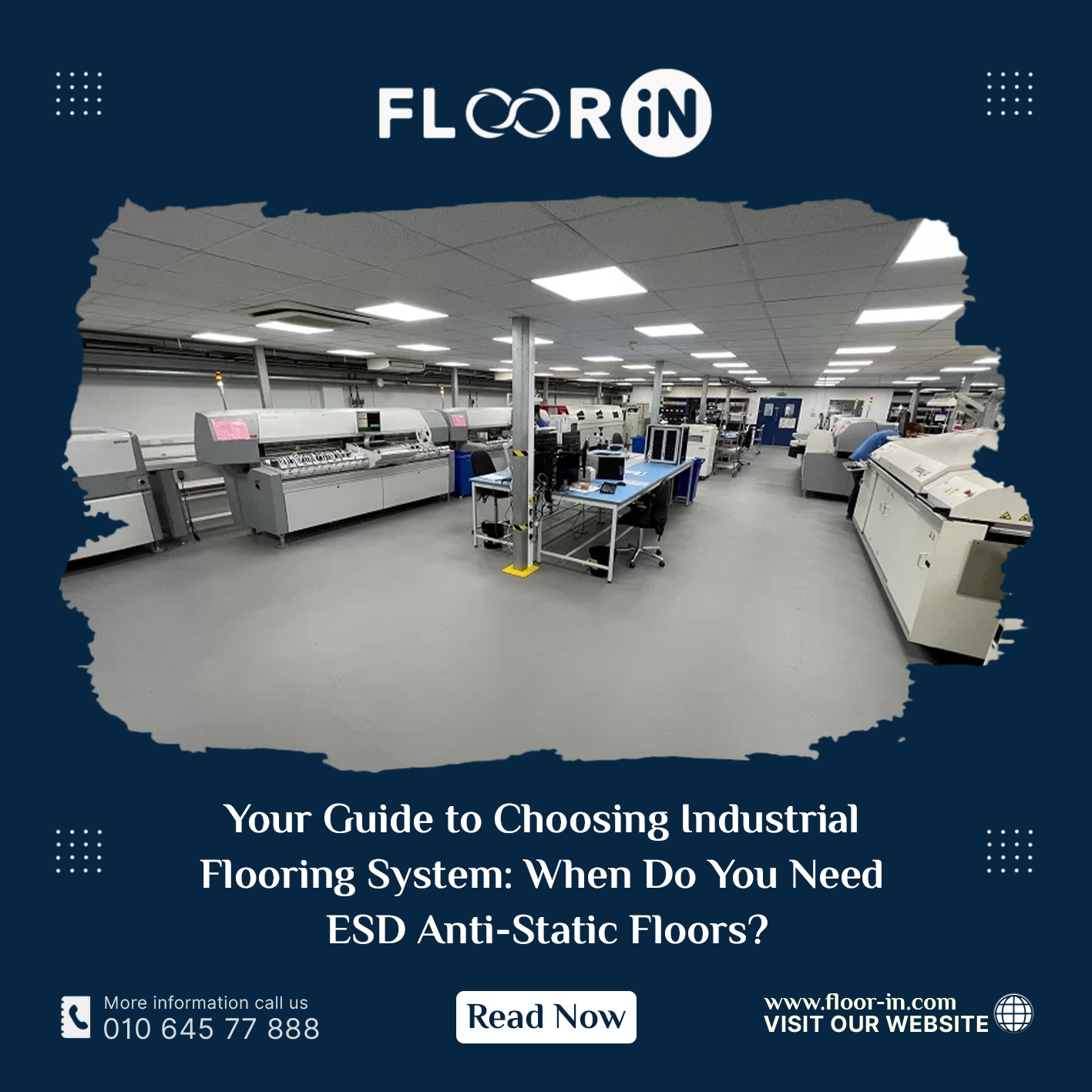
Choosing an industrial flooring system is not merely an aesthetic or structural decision — it is a strategic choice that directly impacts worker safety, product quality, and operational continuity.
In certain industrial environments, a regular floor can become the hidden cause of a catastrophic accident due to static electricity buildup.
That’s where ESD Anti-Static Flooring industrial flooring system come into play — designed specifically to control electrostatic discharge and protect facilities from its risks.
What Is ESD Anti-Static industrial flooring system ?
ESD (Electrostatic Discharge) Anti-Static Flooring is a specialized type of industrial floor with conductive or semi-conductive properties.
Its main function is to safely discharge static electricity to the ground.
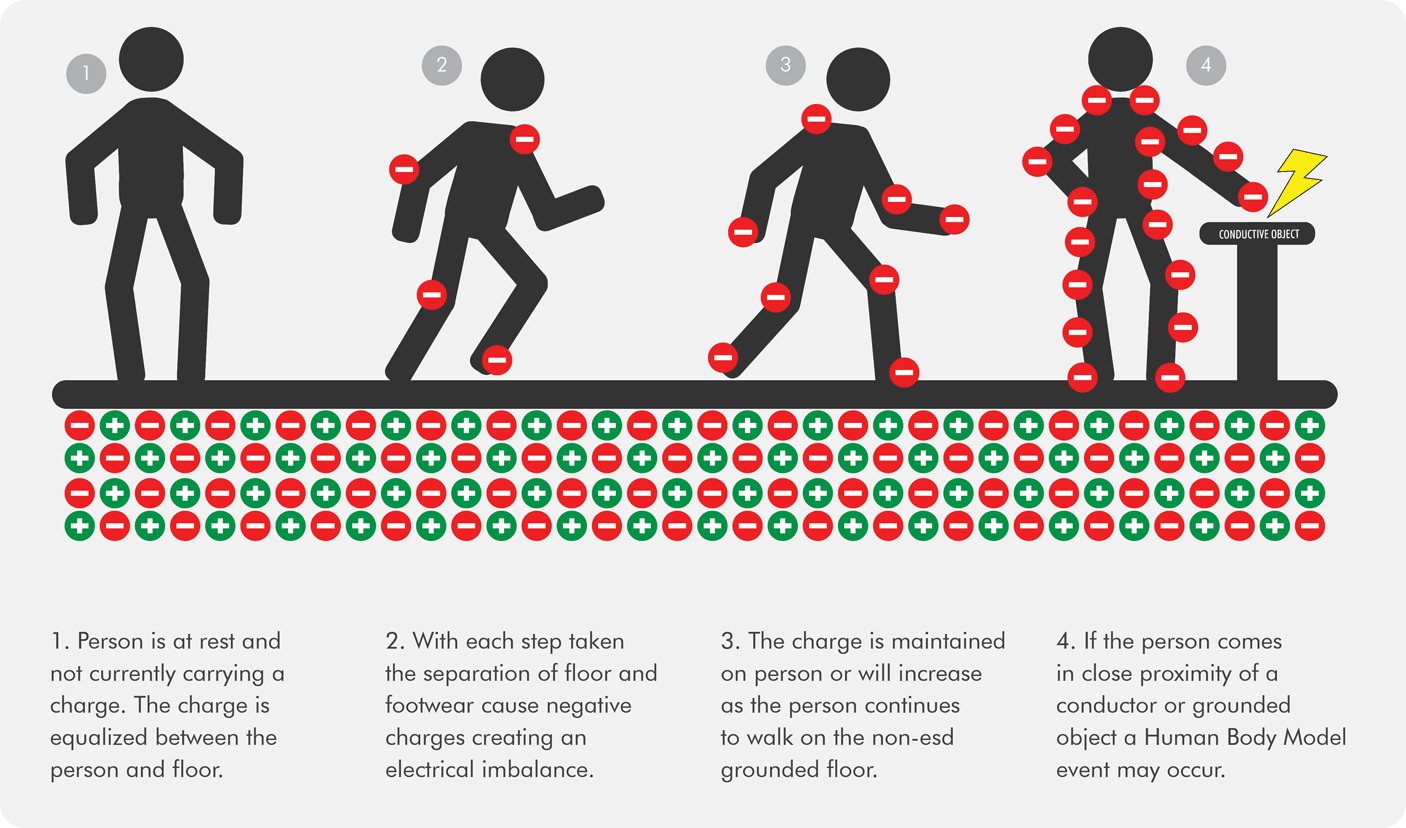
Such charges can arise from simple daily actions — walking, friction between packaging materials, or equipment movement.
While in normal conditions, static discharge is harmless (like a small electric shock when touching metal), in sensitive industrial environments, it can turn into a dangerous spark capable of causing explosions or equipment damage worth millions.
Why Regular Flooring Isn’t Enough
Traditional floors — whether concrete or standard epoxy — offer no protection against static electricity.
In fact, they can sometimes increase charge buildup instead of dissipating it.
In facilities handling gases, vapors, or flammable chemicals, this poses an unacceptable risk.
Simply put, using regular flooring in such an environment is like driving a race car without brakes — things might seem fine for a while, but one mistake could cost everything.
When Do You Really Need ESD Anti-Static Flooring?
1. Pharmaceutical Industries
Pharmaceutical labs require clean, stable, and controlled environments.
Many raw materials are in fine powder form, which can easily ignite or react to electrostatic charges.
Installing ESD flooring helps:
-
Prevent sparks that could cause explosions.
-
Protect sensitive active ingredients.
-
Ensure safe operation of precision instruments and analysis systems.
2. Chemical and Petrochemical Plants
These are among the most hazard-prone environments, filled with flammable gases and vapors.
Here, ESD flooring is not optional — it’s a safety requirement.
It minimizes explosion risks and protects both workers and high-value assets.
3. Electronics Manufacturing
In electronics production, even a tiny static charge of a few volts can destroy delicate components.
Anti-static flooring ensures product integrity and reduces rejection rates.
4. Data Centers
Servers and data storage systems are highly sensitive to static electricity.
An uncontrolled discharge could crash systems or corrupt vital data.
ESD flooring provides a stable and secure foundation for these critical facilities.
5. Hospitals and Medical Laboratories
Medical devices such as MRI and diagnostic systems can malfunction due to static buildup.
ESD floors reduce this risk, ensuring patient safety and operational reliability.
Key Criteria for Choosing the Right ESD Flooring System
When selecting an industrial anti-static flooring system, several critical factors should be considered:
-
Electrical Resistance Level:
Conductive, semi-conductive, or static-dissipative options must be chosen based on industry requirements. -
Ease of Cleaning and Maintenance:
Essential in industries like pharmaceuticals and food processing with strict hygiene standards. -
Chemical Resistance:
For plants dealing with acids, solvents, or strong chemicals, resistance is crucial. -
Durability:
Floors must withstand heavy loads, high traffic, and mechanical stress. -
Compliance with International Standards:
Such as OSHA, ATEX, and IEC, ensuring full safety and regulatory conformity.
Long-Term Benefits of Installing an ESD Industrial Flooring System
-
Reduced Risk of Accidents:
Minimized explosion and fire hazards. -
Protection of Investments:
Safeguards high-value equipment and sensitive products. -
Operational Continuity:
Prevents costly downtime and production halts. -
Regulatory Compliance:
Facilitates smooth audits and certifications. -
Enhanced Reputation:
Demonstrates a strong commitment to safety, quality, and professional standards.
What Happens If You Ignore ESD Flooring Solutions?
At first glance, installing an ESD industrial flooring system may seem like an additional cost.
However, neglecting it can lead to far greater losses — from halted production lines to small explosions causing major disruptions or failed audits that cost lucrative contracts.
The financial and reputational damage far exceeds the installation cost.
Conclusion in Industrial Flooring System
Choosing the right industrial flooring system is a strategic decision that defines the safety and stability of your operations.
When your industry faces electrostatic risks, ESD Anti-Static Flooring is not a luxury — it’s a necessity.
With FLOOR IN, you’re not just investing in a flooring system — you’re investing in safety, product quality, and long-term reliability.
If you want a secure, compliant, and efficient workspace that inspires confidence in both clients and regulators,
the first step starts with the floor beneath your feet.