Skip to content

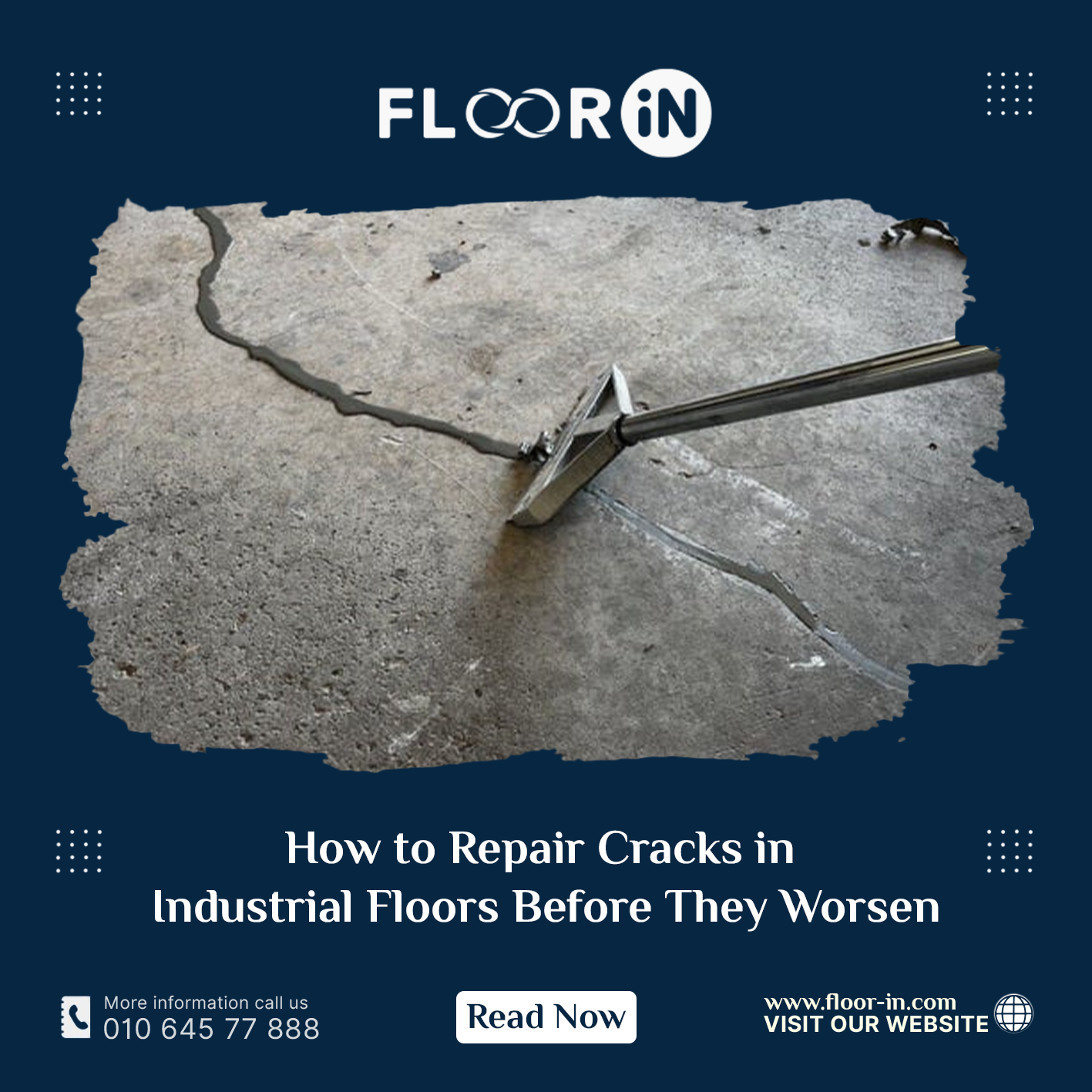
How to Repair Cracks in Industrial Floors Before They Worsen Industrial floors are a vital component in factories, warehouses, hospitals, and large parking facilities.
Despite their high durability, constant exposure to heavy loads and harsh environmental factors can lead to cracks over time.
These small cracks may seem minor at first, but if neglected, they can expand and cause serious structural and safety issues.
In this article, we’ll discuss how to repair cracks in industrial floors before they worsen, ensuring long-term durability, safety, and professional appearance.

Common Causes of Cracks in Industrial Floors
Before addressing the repair process, it’s important to understand why cracks form in the first place:
-
Excessive load: Frequent movement of heavy machinery such as forklifts.
-
Continuous vibrations: Caused by automated industrial operations.
-
Thermal changes: Expansion and contraction due to fluctuating temperatures.
-
Installation defects: Poor material mixing or inadequate leveling during application.
-
Chemical exposure: Leakage of corrosive substances onto the floor surface.
Why You Should Repair Cracks Immediately
-
Prevent further damage: Small cracks can widen quickly with continued use.
-
Protect your investment: Early intervention reduces the need for costly replacements later.
-
Enhance safety: Cracks can lead to tripping hazards or equipment damage.
-
Maintain a professional image: A flawless floor reflects operational quality and attention to detail.

How to Repair Cracks in Industrial Floors Before They Spread
Repairing cracks in industrial flooring systems — whether concrete, epoxy, or polymer-based — is essential to maintain durability, safety, and aesthetics.
Below are step-by-step methods based on the type and depth of the crack:
1. Assess the Type and Cause of the Crack
-
Surface cracks (hairline or shallow): Usually caused by shrinkage or thermal changes.
-
Deep cracks: Indicate structural stress or overloading.
-
Progressive cracks: Suggest foundation or sub-base issues.
2. Steps for Repairing Concrete Floor Cracks
-
Clean the crack area
Use a wire brush or air blower to remove dust, debris, and loose particles.
Ensure the area is completely dry and clean. -
Widen the crack slightly
Use a hammer and chisel or an angle grinder to open the crack in a “V” shape.
This helps ensure better bonding of the repair compound. -
Fill the crack with a suitable repair material
Choose the right compound depending on crack size and depth:-
Small cracks (< 3 mm): Use an epoxy or polymer crack filler.
-
Larger or deeper cracks: Use acrylic-modified cementitious mortar or low-viscosity epoxy resin.
-
-
Level the surface
Use a trowel to smooth the filled area until it’s flush with the surrounding floor. -
Allow curing time
Follow the manufacturer’s recommended drying time (typically 24–48 hours). -
Recoat or seal the floor (optional)
Apply an epoxy or industrial coating to protect against future cracking and enhance durability.
Note:
For moving cracks (those that expand or contract), use flexible fillers such as industrial-grade silicone or polyurethane sealants.
For epoxy-coated floors, lightly sand the surface before applying a special epoxy crack repair resin to ensure proper adhesion.
Step-by-Step Repair Process for Industrial Flooring Cracks
-
Evaluate the damage
Determine whether the crack is surface-level or deep. In complex cases, consult a flooring specialist for accurate assessment. -
Clean the affected area
Remove dirt, oil, and debris using industrial-grade cleaning tools to ensure strong adhesion of repair materials. -
Prepare the crack
Slightly widen the crack using professional tools to reach the base and enhance bonding performance. -
Select the appropriate repair material
Depending on your flooring type, you may use:-
Epoxy repair compound: Ideal for concrete and epoxy floors.
-
Polymer-modified mortar: For restoring structural strength.
-
Polyurethane filler: For floors exposed to vibration or chemicals.
-
-
Apply the repair material
Follow manufacturer instructions carefully, ensuring even distribution and complete filling of the crack. -
Finish and protect the surface
Once repaired, apply a protective topcoat such as Epoxy Coating or Polyurethane Seal to enhance wear resistance and longevity.
Maintenance Tips After Crack Repair
-
Conduct regular inspections to detect and address new cracks early.
-
Apply protective coatings periodically, based on industrial activity levels.
-
Ensure balanced load distribution to avoid structural stress.
-
Perform routine cleaning using non-corrosive materials suitable for your floor type.

When to Call a Professional
If cracks spread across a large area or affect the level and stability of the floor, it’s best to contact a specialized industrial flooring company such as Floor In.
Their experts provide comprehensive repair and maintenance solutions using the latest techniques and high-quality materials that meet international safety standards.
Conclusion in How to Repair Cracks in Industrial Floors Before They Worsen
Repair Cracks in industrial floors is not just a matter of appearance — it’s a smart investment that safeguards your facility from costly damage and operational risks.
Timely intervention and the use of appropriate materials are key to prolonging floor lifespan and maintaining top performance.
Looking for professional industrial floor repair services?
Contact Floor In today for a free consultation and tailored solutions to restore and protect your flooring system.