Skip to content

When it comes to food factory flooring, there are several important factors that must be taken into consideration. First and foremost, the flooring must be able to withstand continuous foot traffic, and it must also be easy to clean and maintain. Additionally, it is essential for the surface to be slip-resistant to prevent accidents in the workplace.
There are various types of flooring that can be used in food production facilities. One popular option is vinyl flooring, which is known for its durability and ease of maintenance, making it an excellent choice for food factory environments.
Another common option is epoxy flooring. Epoxy floors are highly durable, easy to clean, and offer a slip-resistant surface, which makes them particularly suitable for food factories and processing plants.
What Are Food Factory Floors?
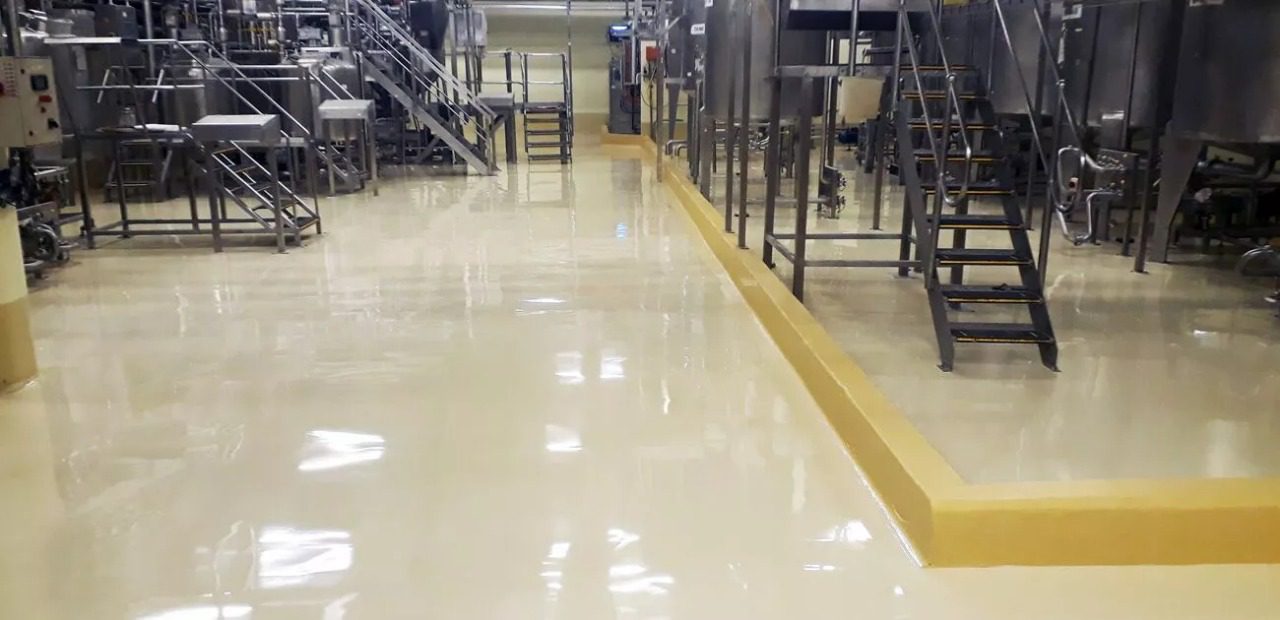
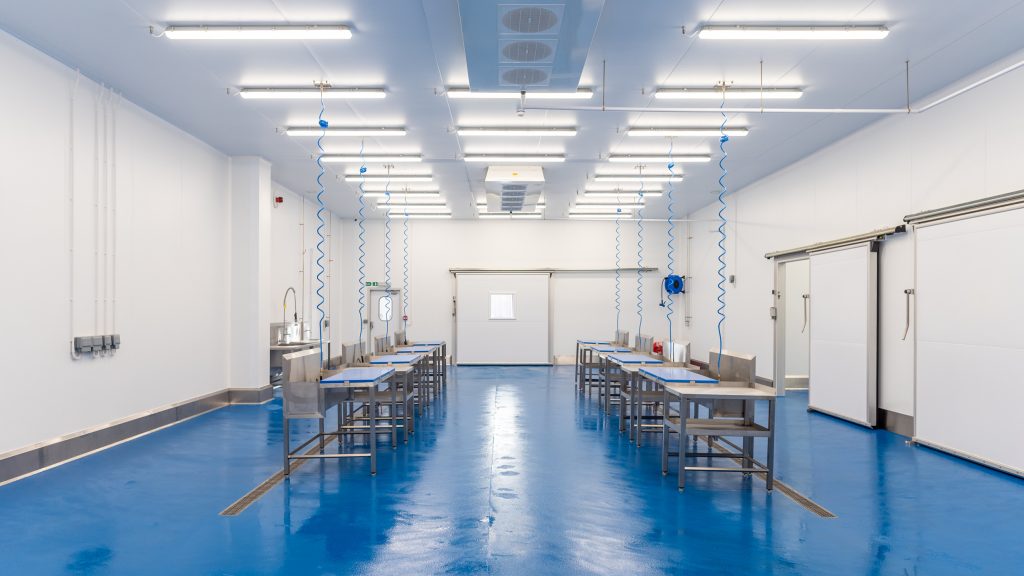
Food factory flooring plays a crucial role in ensuring the production of safe and high-quality food products. These floors must be designed and constructed to withstand heavy foot traffic and equipment, while also protecting food products from contamination.
To meet health and safety standards, food factory floors should be smooth, non-porous, and easy to clean and disinfect. A range of flooring materials can be used, including concrete, epoxy, and vinyl.
At Floor In, we provide a variety of industrial flooring solutions designed specifically for food processing facilities. Our flooring systems are engineered to withstand heavy loads and frequent movement, resist bacterial growth to ensure food safety, and provide a slip-resistant surface that is easy to maintain and sanitize.
In addition to durability and safety, our flooring solutions are available in a wide range of colors and patterns, allowing you to select a design that suits your facility—whether you prefer a classic look or a modern, distinctive style.
Types of Food Factory Flooring
When selecting flooring for a food processing facility, the flooring must be able to handle heavy traffic, be easy to clean, and provide a non-slip surface. Below are the most common types:
-
Epoxy Flooring
Epoxy flooring is one of the most widely used solutions in food factories. It is made from a mixture of resin and hardener applied to the ground and left to cure. Epoxy flooring is exceptionally durable, resistant to heavy pressure and abrasion, and very easy to clean. Additionally, epoxy coatings are naturally slip-resistant, which is essential in food production areas.
-
Concrete Flooring
Concrete is another common flooring option due to its strength and longevity. However, it can become slippery when wet, so it must be properly sealed to improve safety.
-
Tile Flooring
Tile flooring, typically made from ceramic or porcelain, is available in many designs and colors. Tiles are easy to clean but can become slippery when wet and are not as durable as epoxy or concrete, meaning they may require more frequent replacement.
-
Vinyl Flooring
Vinyl flooring is made from PVC and is available in several styles and colors. It is easy to install and clean, and resistant to spills and stains, making it a practical choice for many food facilities.

Floor‑IN – Food Factory Flooring
-
Specializes in food and beverage factory flooring with focus on hygiene and safety.
-
Offers seamless epoxy, polyurethane screeds, and mortar systems resistant to heat, chemicals, oils, and fats.
-
Flooring designed to withstand heavy machinery, high traffic, and repeated wash‑downs.
-
Provides custom thickness (1–4 mm) and finishes tailored to functional and aesthetic requirements.
-
Emphasizes complete surface preparation for durability and long-lasting performance.
-
Surfaces are easy to clean, meeting global food safety standards.
-
Acts as a full-service provider: consulting, design, installation, and project supervision.
-
Over 20 years of experience serving industrial sectors across the Middle East and North Africa.
Conclusion
Epoxy flooring is considered one of the best and most reliable flooring solutions for food factories. The flooring surface must be smooth, level, crack-free, and resistant to bacteria to prevent food contamination and maintain product safety. Additionally, the flooring should be able to support heavy equipment and machinery commonly found in food production environments.